
My memories from life in Korea never feel very far away. I still daydream about our time there—longing for the bustling streets of Seoul, the never-ending nightlife, and those majestic inner-city mountains I loved to hike. That chapter of my life changed me in many ways, but perhaps most unexpectedly, it revolutionized my palate.
That said, Korean cuisine and I got off to a rocky start.
When Mark and I first landed at Incheon, dazed from jet lag and waiting for the school district bus to take us to the Samsung Learning Center (where we’d get our crash course in teaching English), we had just enough time to grab a bite to eat. We stumbled into the nearest restaurant like zombies, clueless and starving.
Looking at the menu, I realized I was venturing into unfamiliar territory. I didn’t recognize ANY of the dishes, but one stood out: “cold noodles.” I pictured something simple and refreshing—maybe a chilled noodle salad with a light dressing. What showed up was… not quite what I expected. A bowl of icy noodles swimming in cold broth, served with vinegar and spicy mustard, topped with sliced pear and a hard-boiled egg. I almost keeled over.
But that dish—bibim naengmyeon—eventually became one of my favorite summer meals. Korea kept me on my culinary toes and continues to inspire my cooking adventures in countless ways. One of the biggest game-changers? Kimchi. Kimchi changed my life. I now make almost 18 pounds of it annually, much to my friends’ delight (and occasional confusion).
After an amazing, delicious, and utterly memorable two years in Seoul, moving back to Austin, Texas felt bittersweet. I missed Korea so deeply that it hurt. To soothe my aching heart, I started a cooking column in the Korea Times newspaper, blending my love of Korean flavors with a health-forward, local twist inspired by farmers market produce.
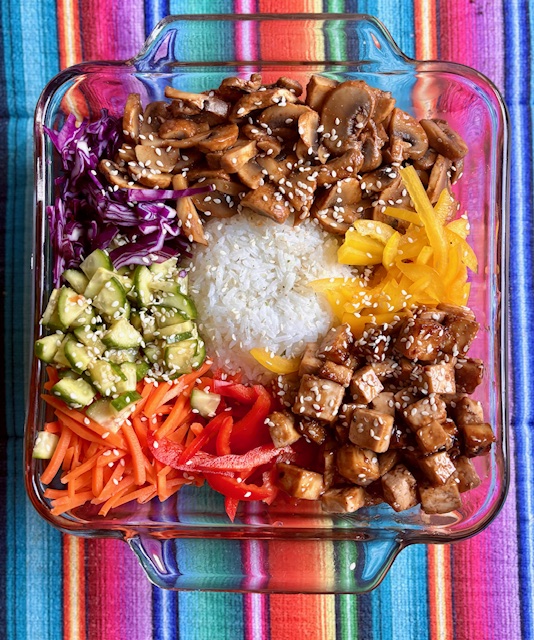
During that time, I started playing around with a kind of fusion bibimbop that became a regular comfort dish—nourishing, nostalgic, and vibrant. While it’s not 100% traditional, it hits all the important notes: rice, veggies, protein, and, of course, gochujang. Best of all, it’s great for meal prep and only gets better the next day.
My Farmers Market Bibimbop (Korean-Inspired Rice Bowl)
This recipe is flexible, colorful, and loaded with texture. I prep a big batch and stretch it across a few days, just adding fresh veggies as I go.
Base Ingredients:
- Cooked white rice (short grain preferred)
- Julienned purple cabbage
- Julienned carrots
- Julienned multicolored bell peppers
Marinated Cucumbers:
- Rice vinegar
- Sesame oil
- Garlic salt
- Lime juice
- Soy sauce
- Honey
- Toasted sesame seeds
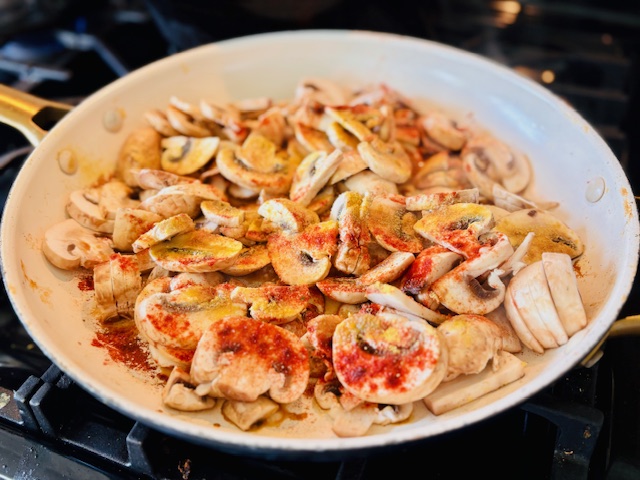
Sautéed Mushrooms:
- Garlic
- Korean red pepper flakes (gochugaru)
- Cracked black pepper
- Salt
- Soy sauce
- Dash of maple syrup
- Paprika
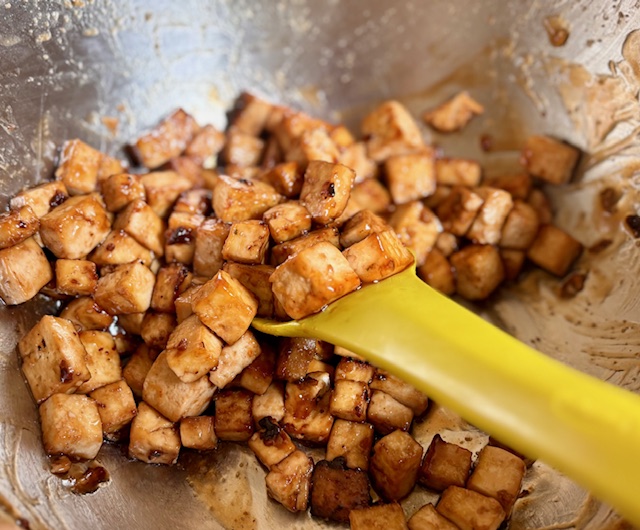
Marinated & Baked Tofu:
- Firm tofu, diced
- Tossed in: oyster sauce, granulated garlic and onion, chili oil
- Bake on parchment at 400°F for 25–30 mins
To Serve:
- Pack warm rice into a small bowl, then invert it in the center of a shallow dish for presentation
- Arrange all veggies and toppings around the rice
- Drizzle with gochujang
- Garnish with extra sesame seeds and crushed walnuts
Every time I make this dish, I’m transported back to that first chaotic day in Korea, to noisy street food stalls, the smell of fish in the air, and the comforting rhythm of Seoul. Food is powerful that way—it keeps the places we love close, even when they’re far away.


 TravelingRecipes